Search
 Submit

 DreamGenAI roleplay and story writing with user-controlled plots, multi-character scenarios, and free or paid plans.
Alternatives to Modelflare
Explore tools compared with Modelflare across categories. Find what fits your workflow.
DreamGenAI roleplay and story writing with user-controlled plots, multi-character scenarios, and free or paid plans. harpy.chatAI character chat and roleplay with group chats, custom bots, personas, and free or premium models.
 Cherry AIDiscover and chat with AI companions, create custom characters, and generate visuals for roleplay on free or paid plans.
Modelflare alternatives, explored
213 alternatives from real comparisons with Modelflare.
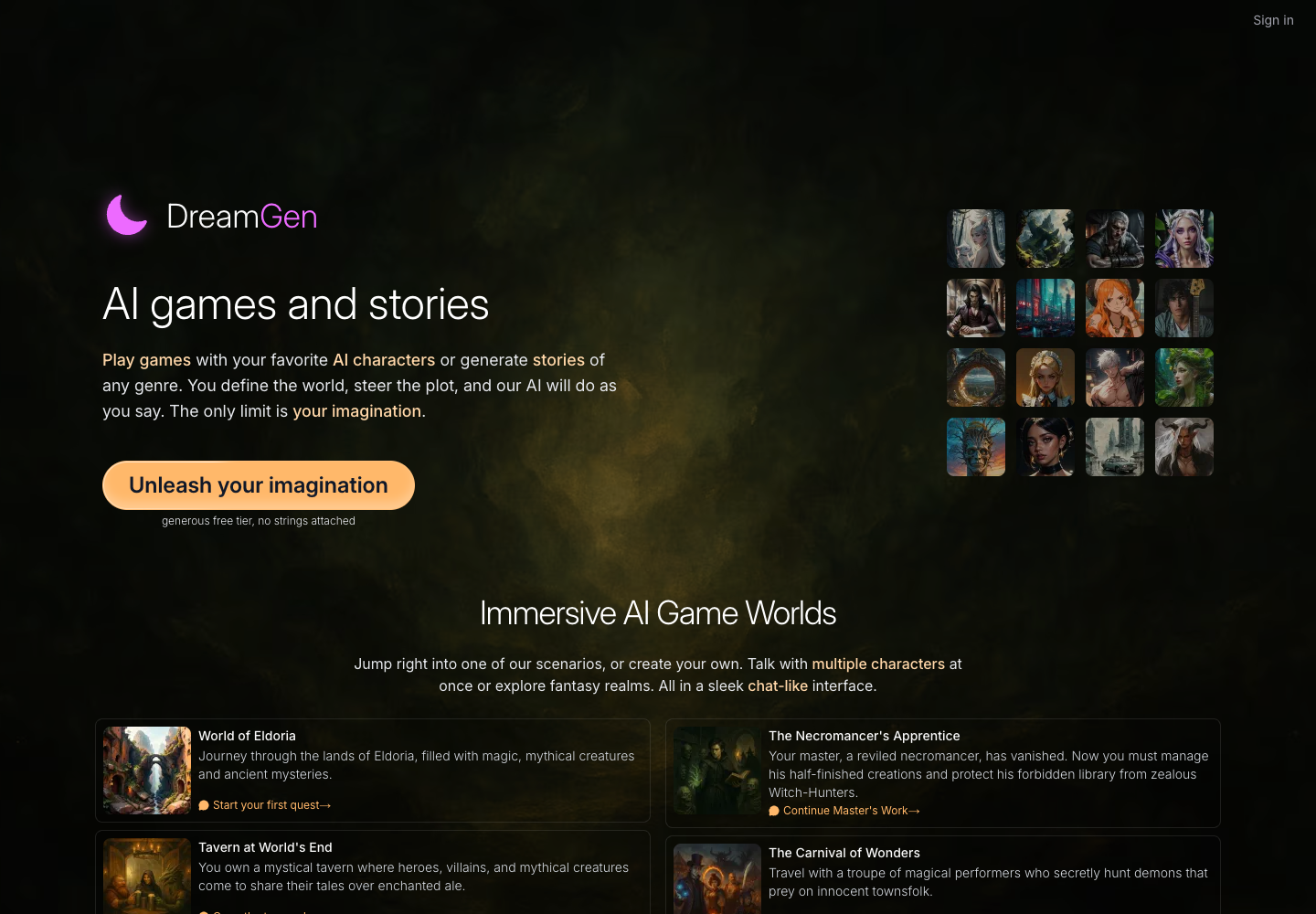
DreamGen is an AI roleplay and story writing platform built around user-controlled plots and multi-character stories. Users can create custom scenarios, choose from available AI models, and use the platform on either free or paid plans.
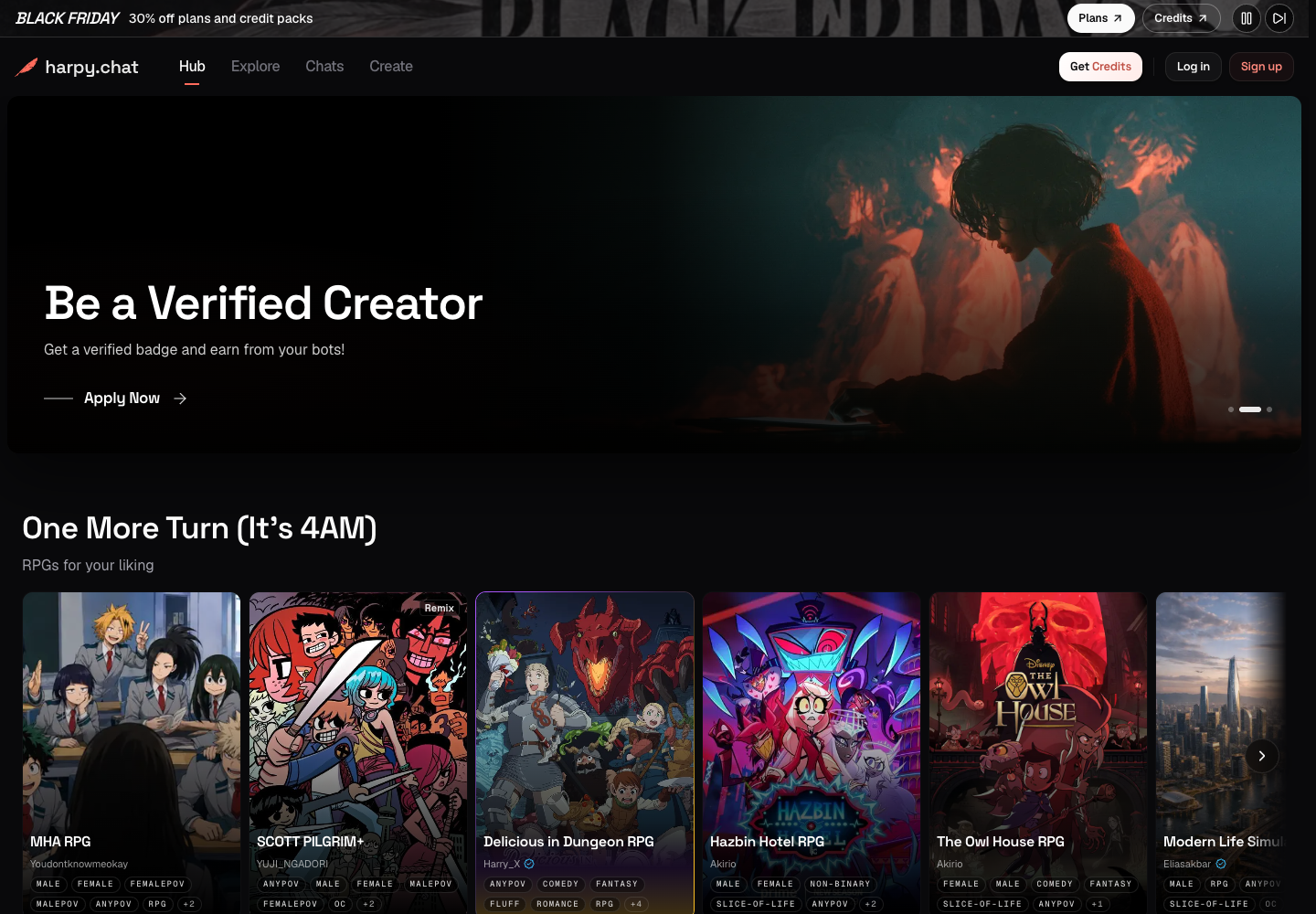
Harpy is an AI character chat and roleplay platform supporting both individual conversations and group chats. Users can create and customize bots, define personas for interactions, and choose between free models and premium models.
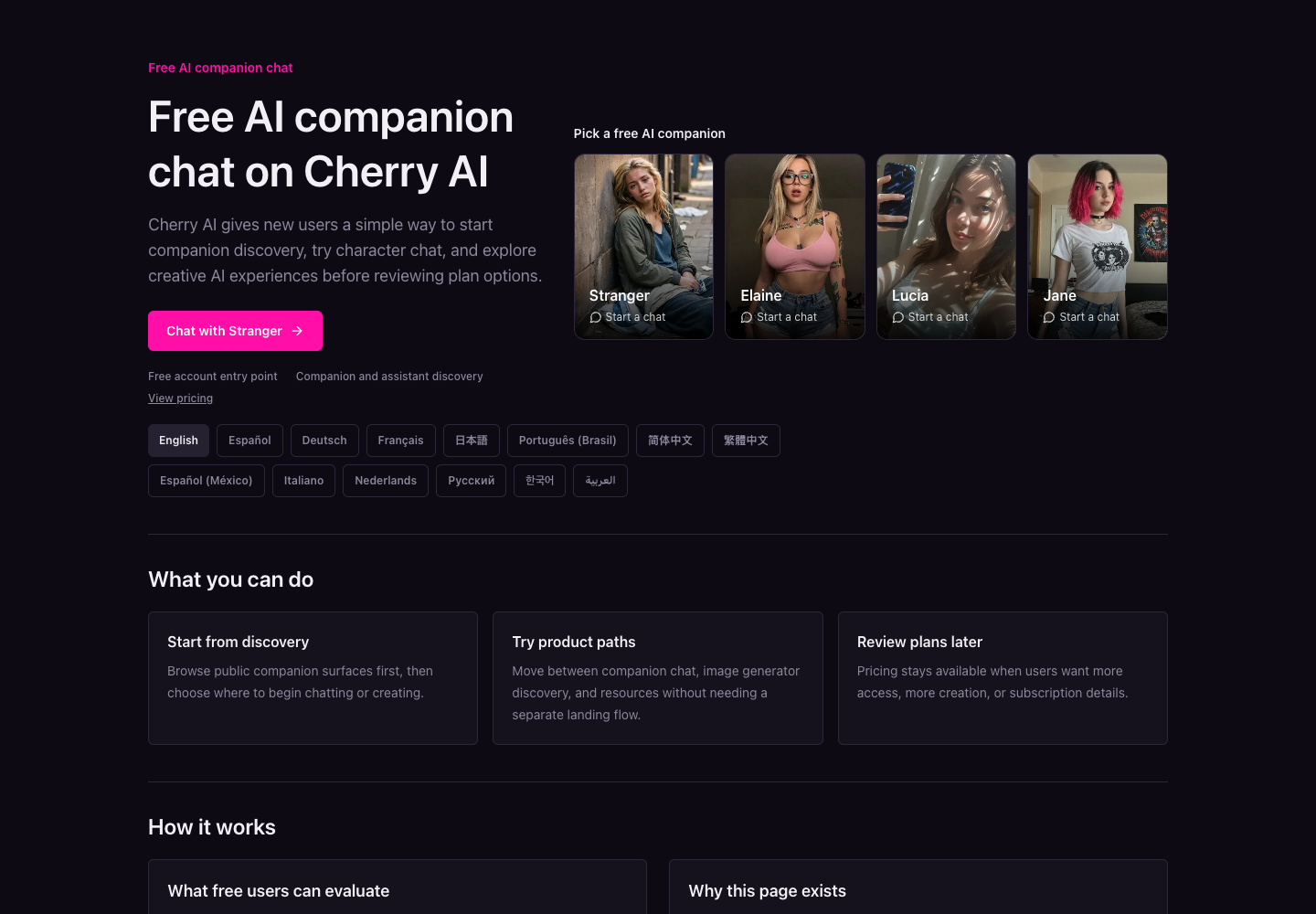
Cherry AI is an AI companion platform for character chat, roleplay, and companion discovery. Users can browse existing companions or create their own custom AI characters, generate visual images alongside conversations, and get started with a free account or upgrade to a paid plan.
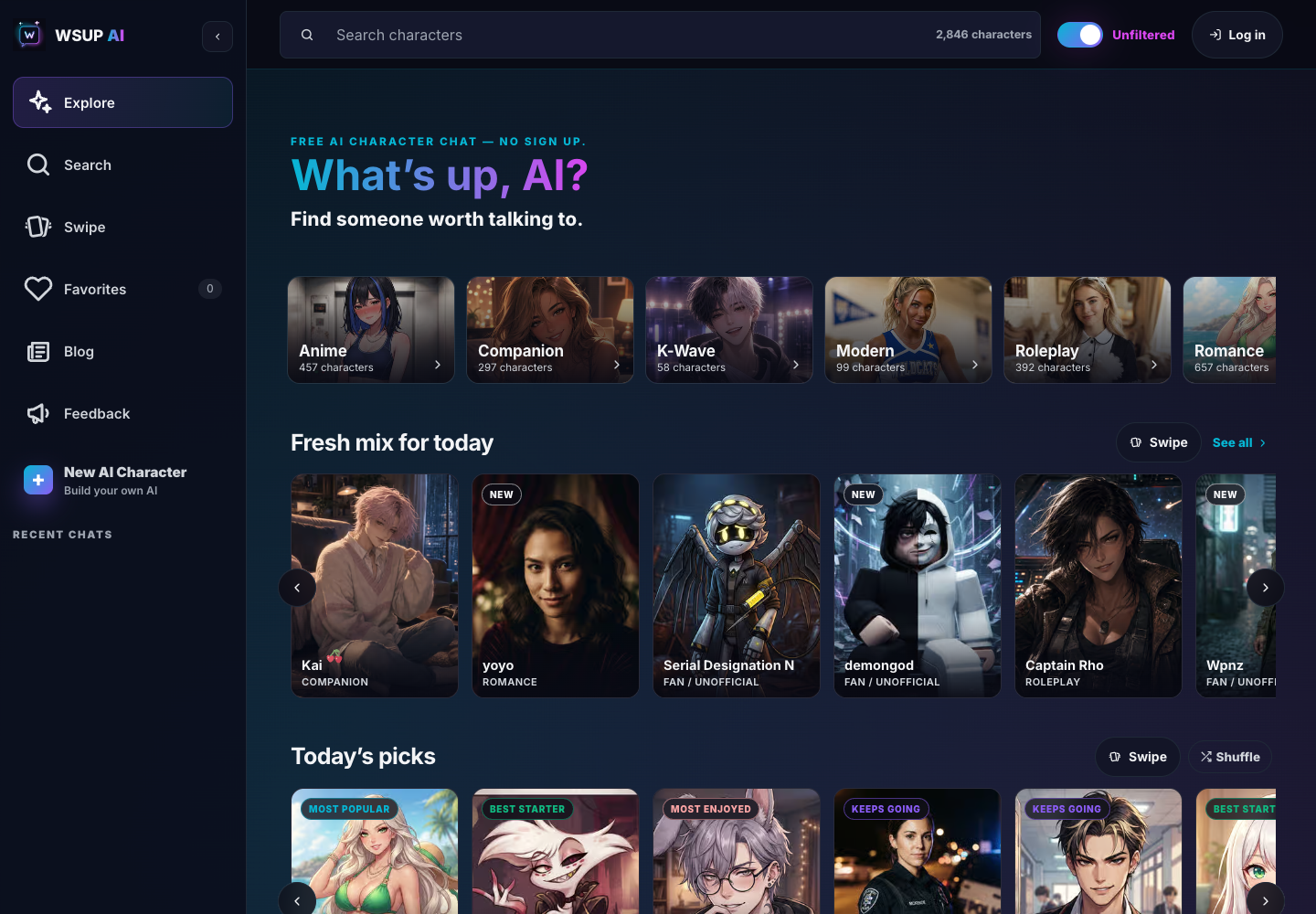
WSUP AI is a browser-based AI character chat service. Browse characters by theme, start a story-driven conversation, or create a character with AI assistance. Characters can answer in their own voices or with generated images, and replies can be regenerated.
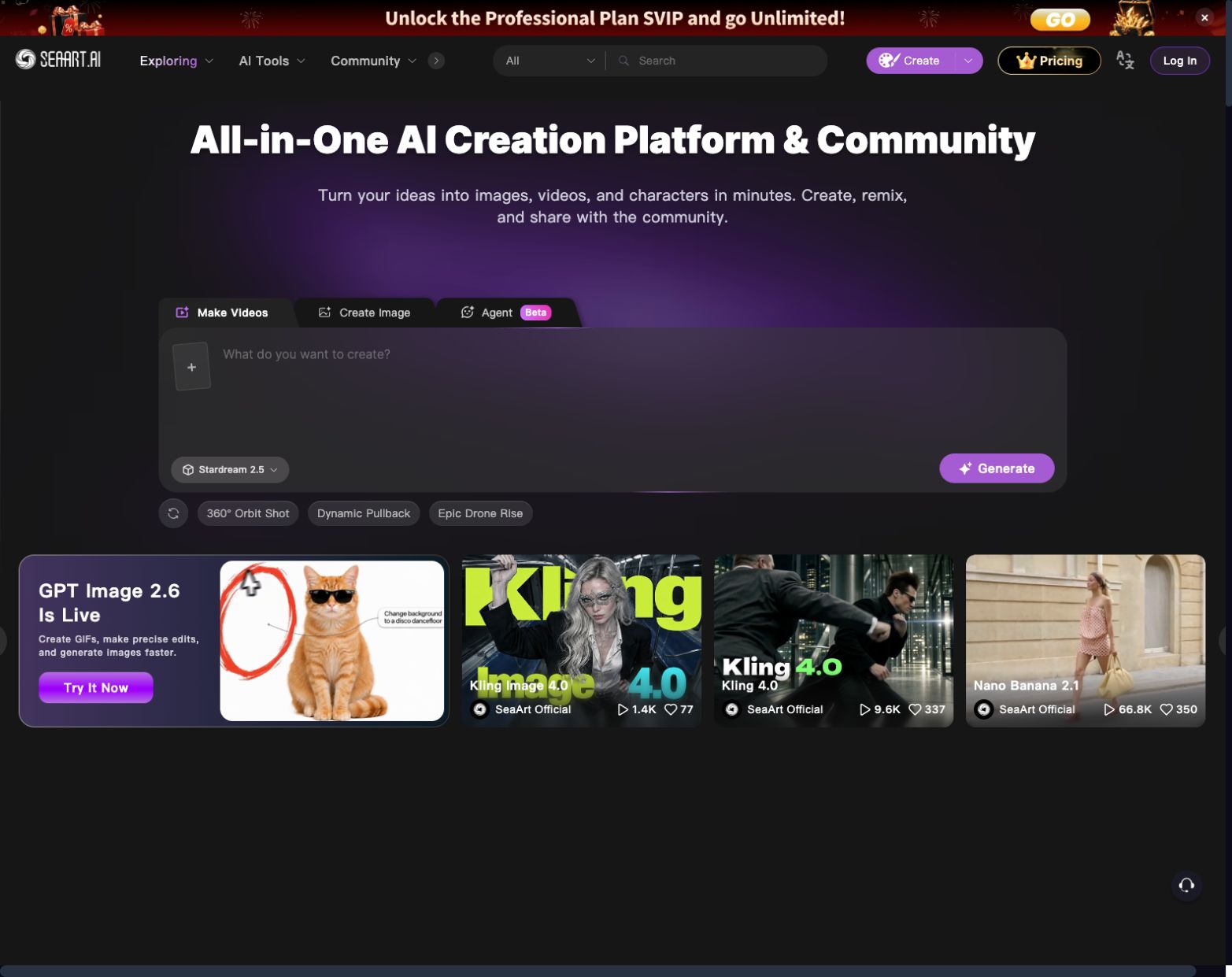
SeaArt AI brings character chat into an image and video creation platform. You can start with a community character or turn a reference image into a character of your own. During a conversation, image and video controls let you illustrate the scene you are playing.
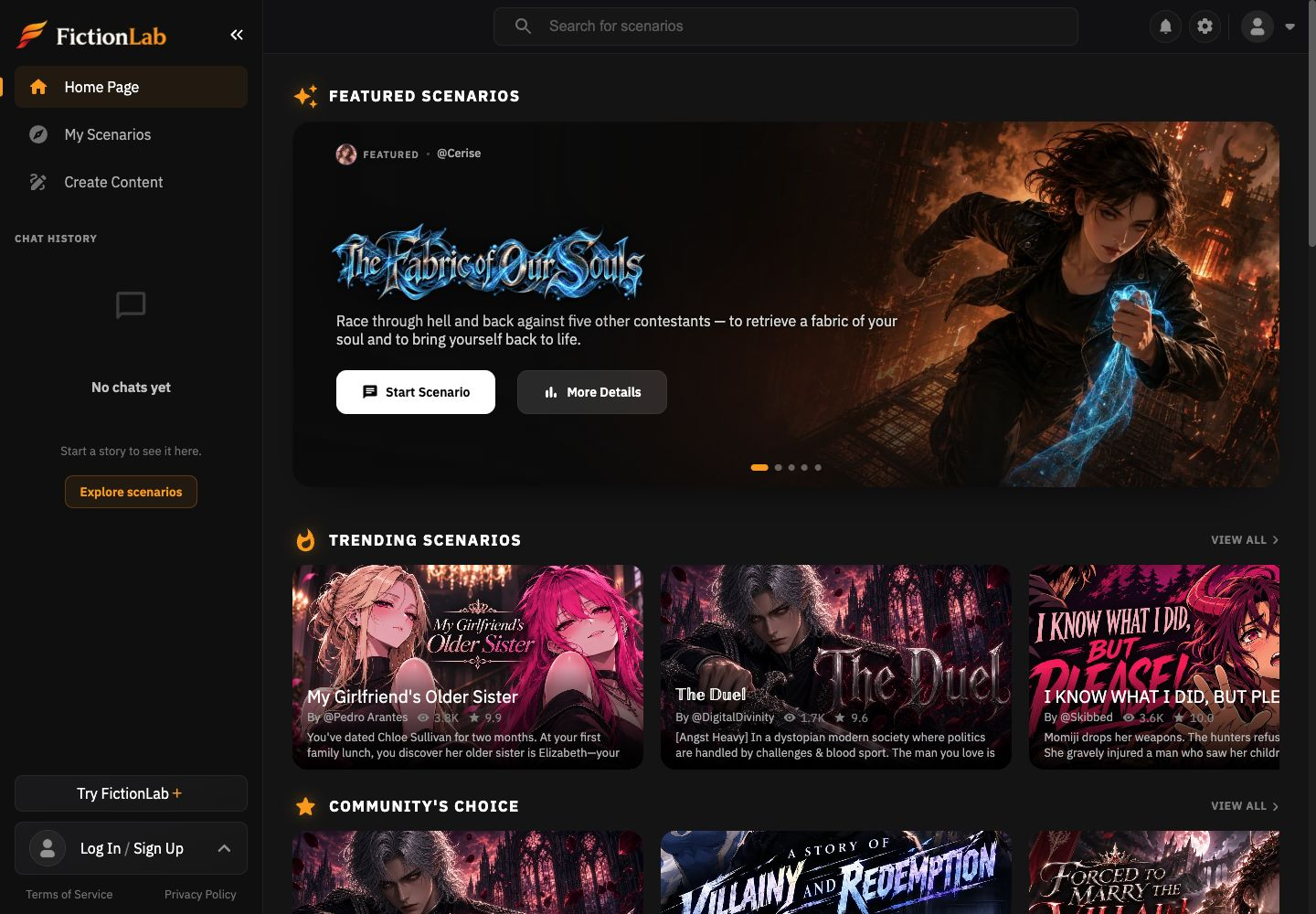
FictionLab puts you inside a written scenario. You play your own character or a role the author has supplied, and the AI speaks for the rest of the cast. The author sets the opening situation and supplies lore about people and places. As a player, you decide how to respond and can adjust the length and style of the replies.

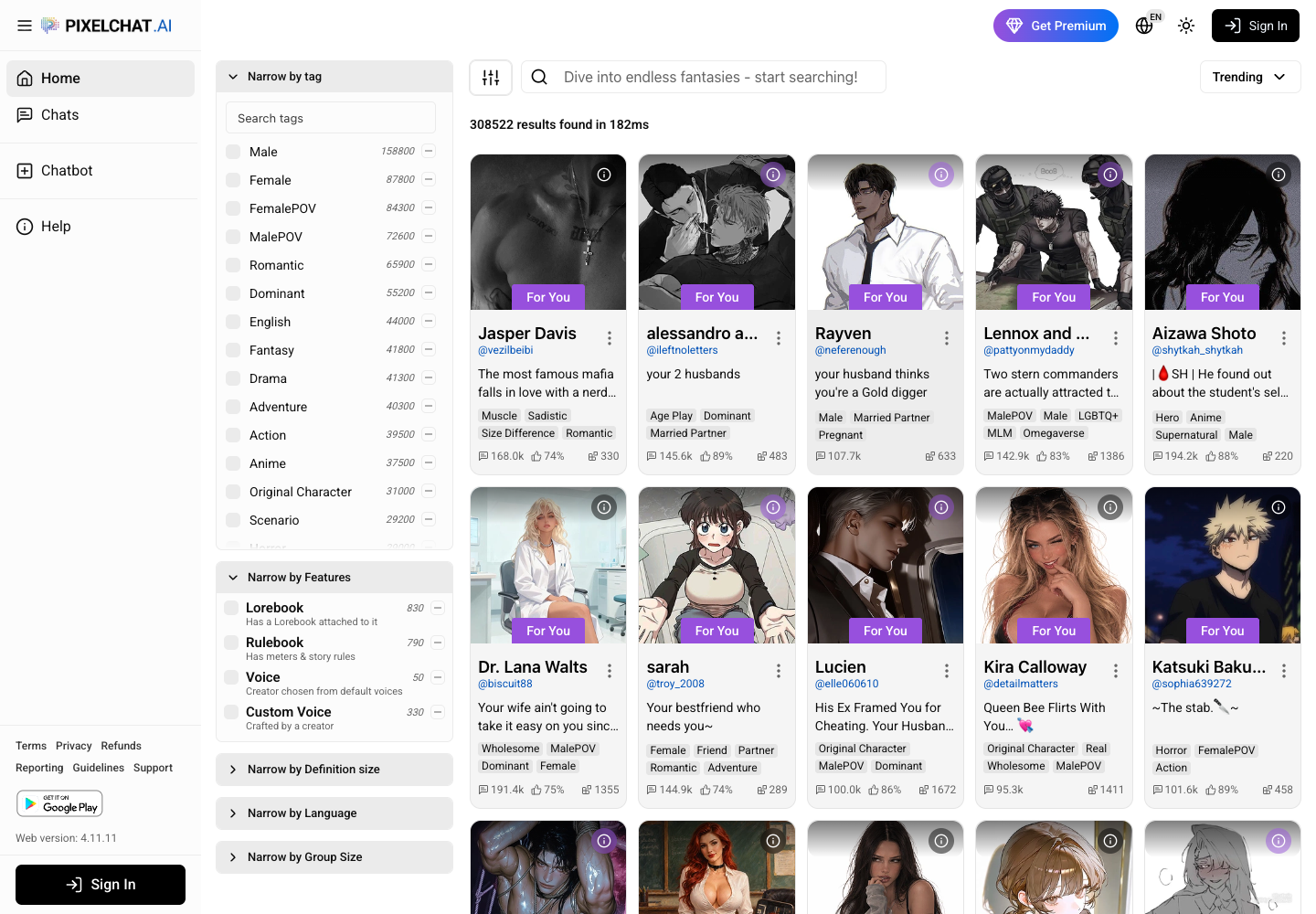
PixelChat is a character-chat community for roleplayers who want to write their own bots or try a character by genre. Tags help readers find a starting point. Creators can add lorebooks, and players can keep several personas to take different roles in different stories. Guests can sample the chat, but their conversations are not saved.

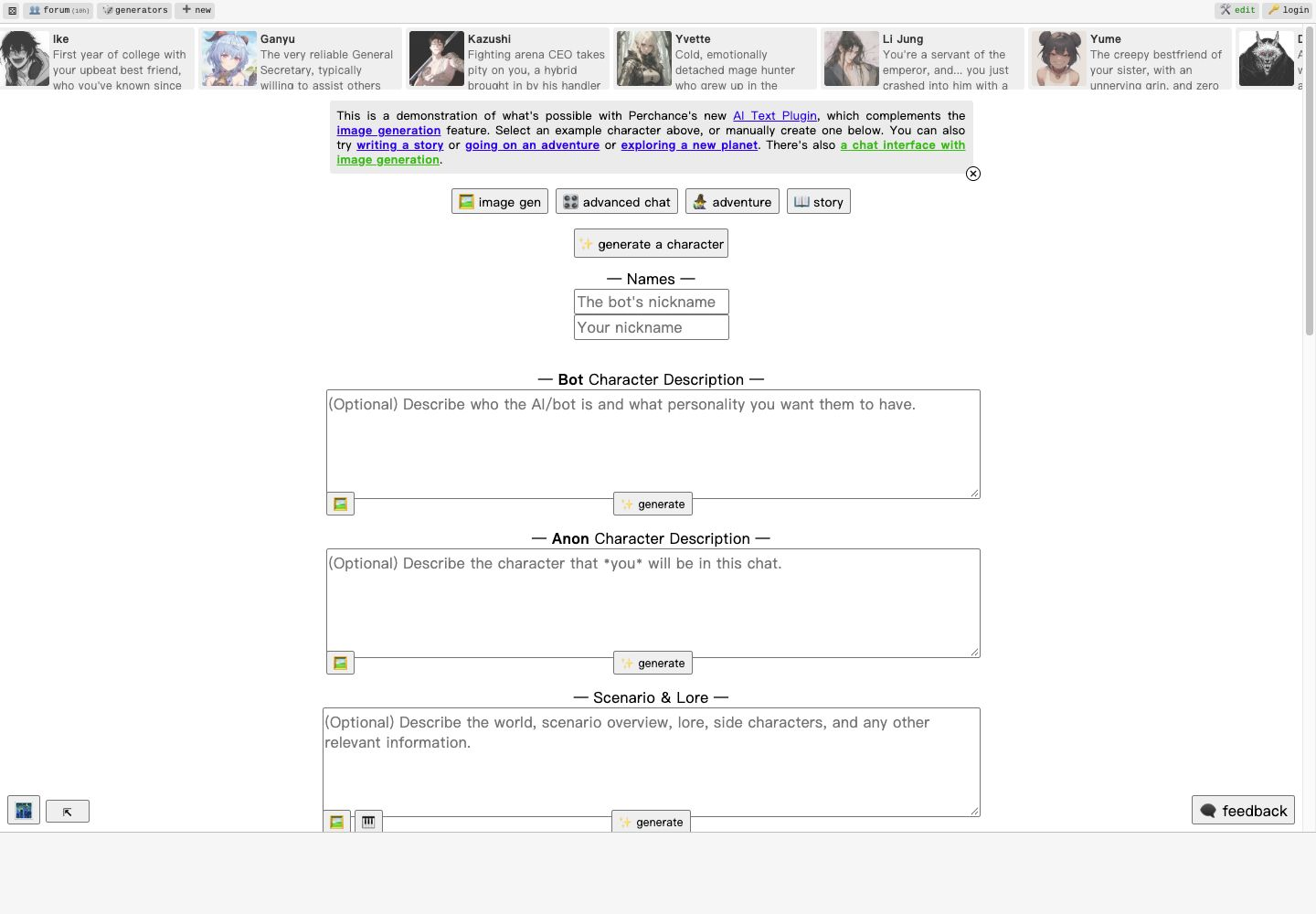
Perchance’s AI Chat & Roleplay is a browser tool for improvising a scene with an AI partner. You decide who each of you plays and where the conversation begins. The page keeps the dialogue in the same browser when you refresh.

CrushOn.AI is a character chat platform for improvised stories. A character’s profile and opening greeting establish the premise. You supply the other side of the scene, whether you are questioning a witness in a mystery or joining a crew on a science-fiction mission.

Character.AI is a community for interactive fiction told through conversation. Pick a character someone else has made and respond in your own words, or create a hero, setting or challenge for others to play. Chat styles change how the character responds, while pinned messages let you keep track of details you want it to remember.
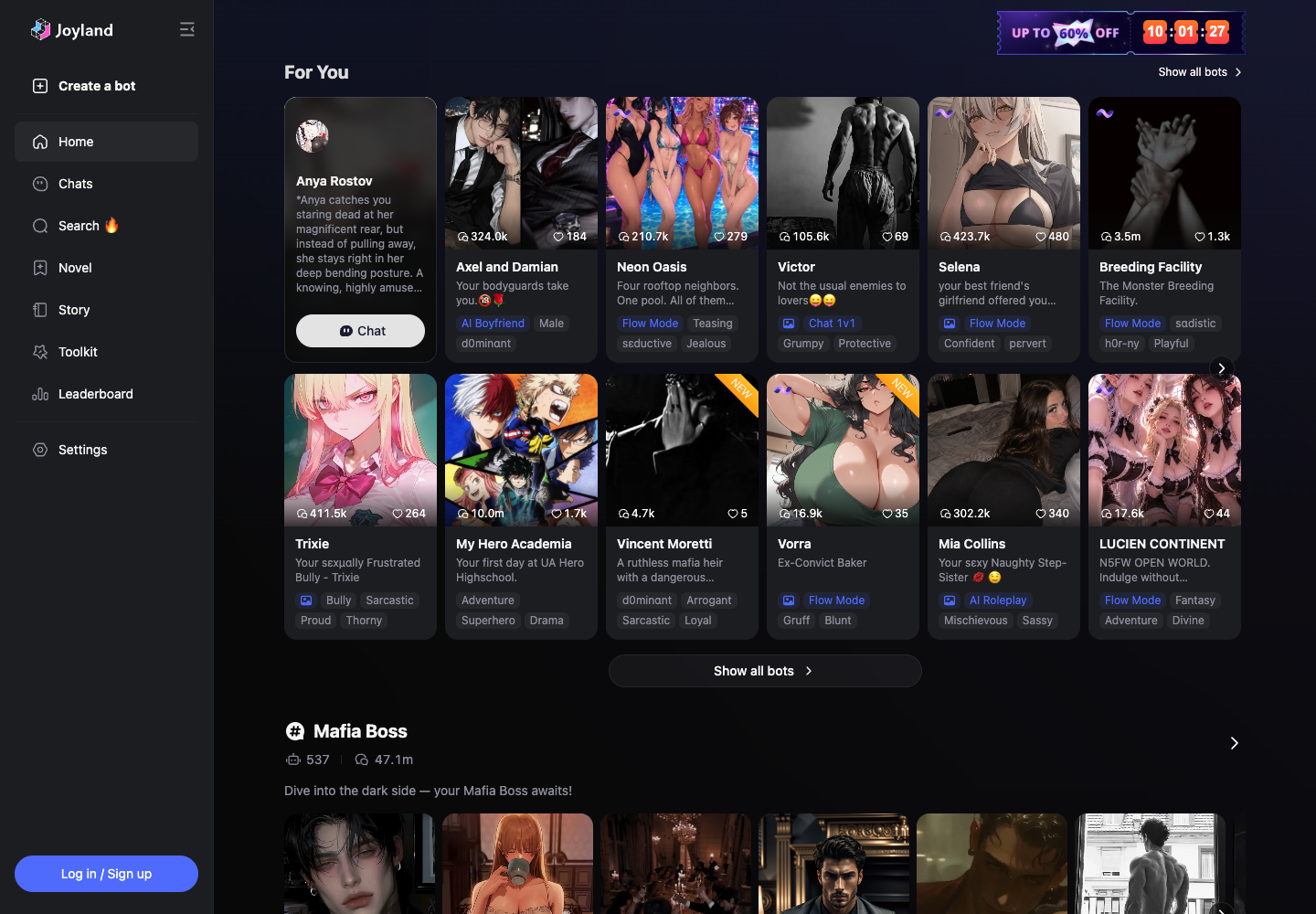
Joyland is a roleplay platform where you can meet an existing character or write one of your own. A bot can draw on a separate lorebook during a conversation. For example, mentioning a town by name can bring its history into a scene.

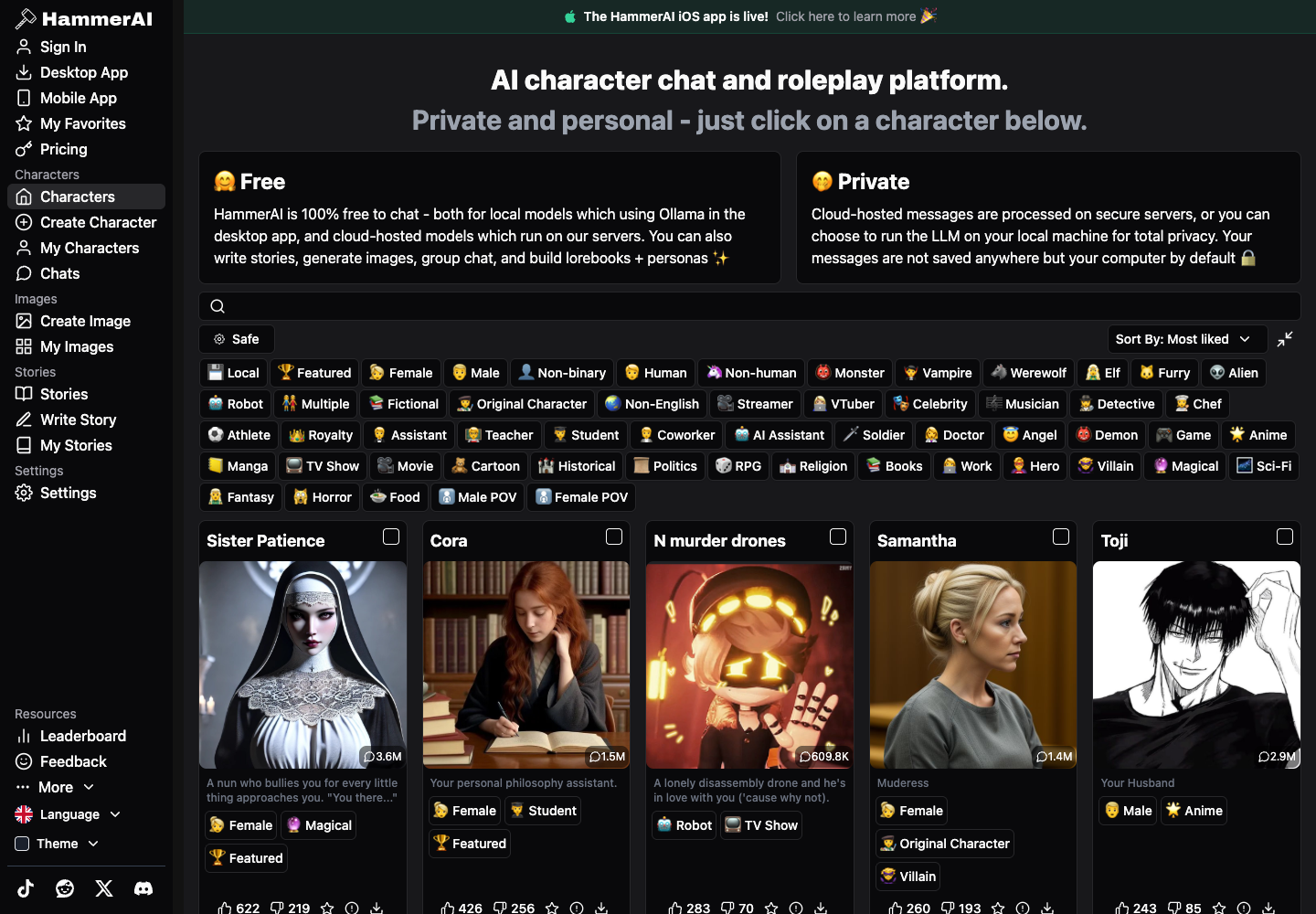
HammerAI lets you pick a character and choose what powers its side of the conversation. You can start chatting with a hosted model on the web, run a local language model in the desktop app, or connect an external model through an API proxy. The character catalog and story editor give you two ways to start writing.

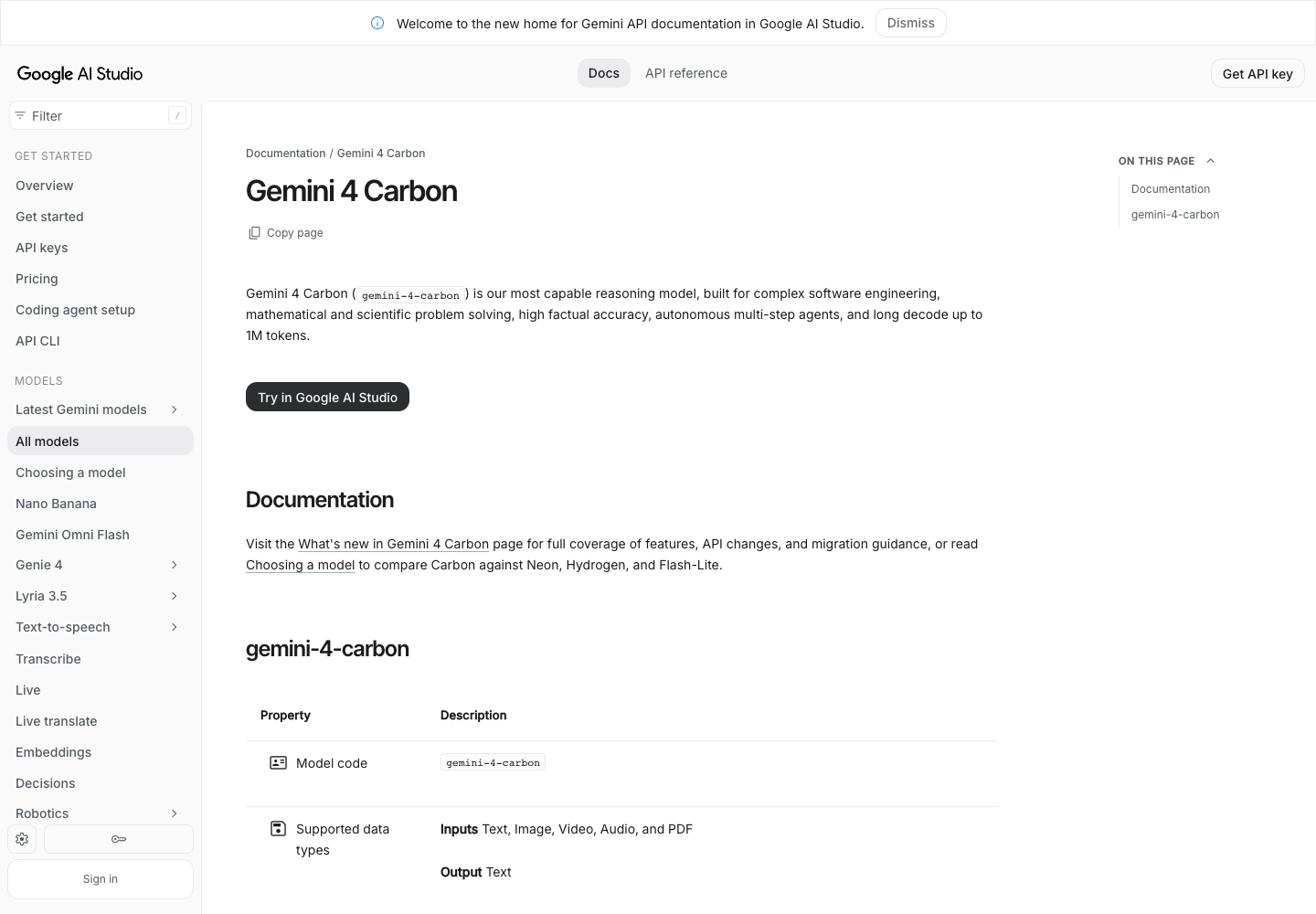
Carbon is a Google model built for complex software engineering and mathematical reasoning. It accepts text, images, audio, video, and PDF inputs within a shared 1,048,576-token context window, supports function calling, and generates text output up to a 65,536-token default synchronous limit.

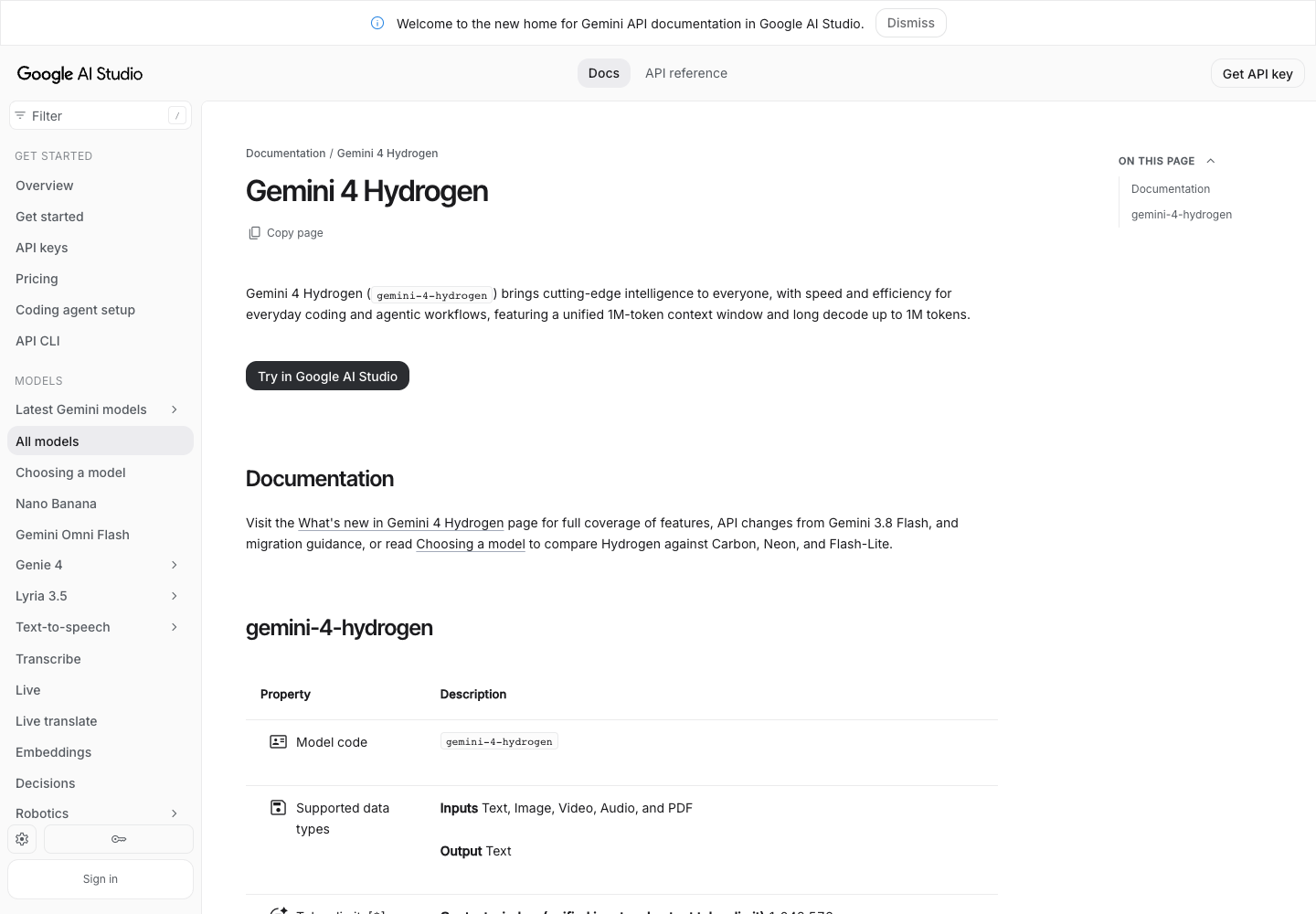
Hydrogen is a Google model for everyday coding and agentic workflows. It accepts text, images, audio, video, and PDF inputs in a shared 1,048,576-token context window, supports function calling for tool integration, and delivers text responses up to a 65,536-token default synchronous output limit.

Argon is a Google model focused on efficient reasoning across coding, math, and science. It handles text, images, audio, video, and PDF inputs within a shared 1,048,576-token context window, supports function calling, and outputs text up to a 65,536-token default synchronous maximum.
Muse is a personal AI agent from Meta that helps users work through everyday tasks and longer-term goals. A user can describe an objective, and Muse can build an action plan, track progress, set reminders and suggest next steps. It can browse the web, create documents and work with connected apps such as email and calendar when access is granted. Users can also ask for help with reservations or shopping; Meta says Muse asks for approval before completing a purchase. The agent combines chat with work across connected services, while the user controls permissions and reviews actions.

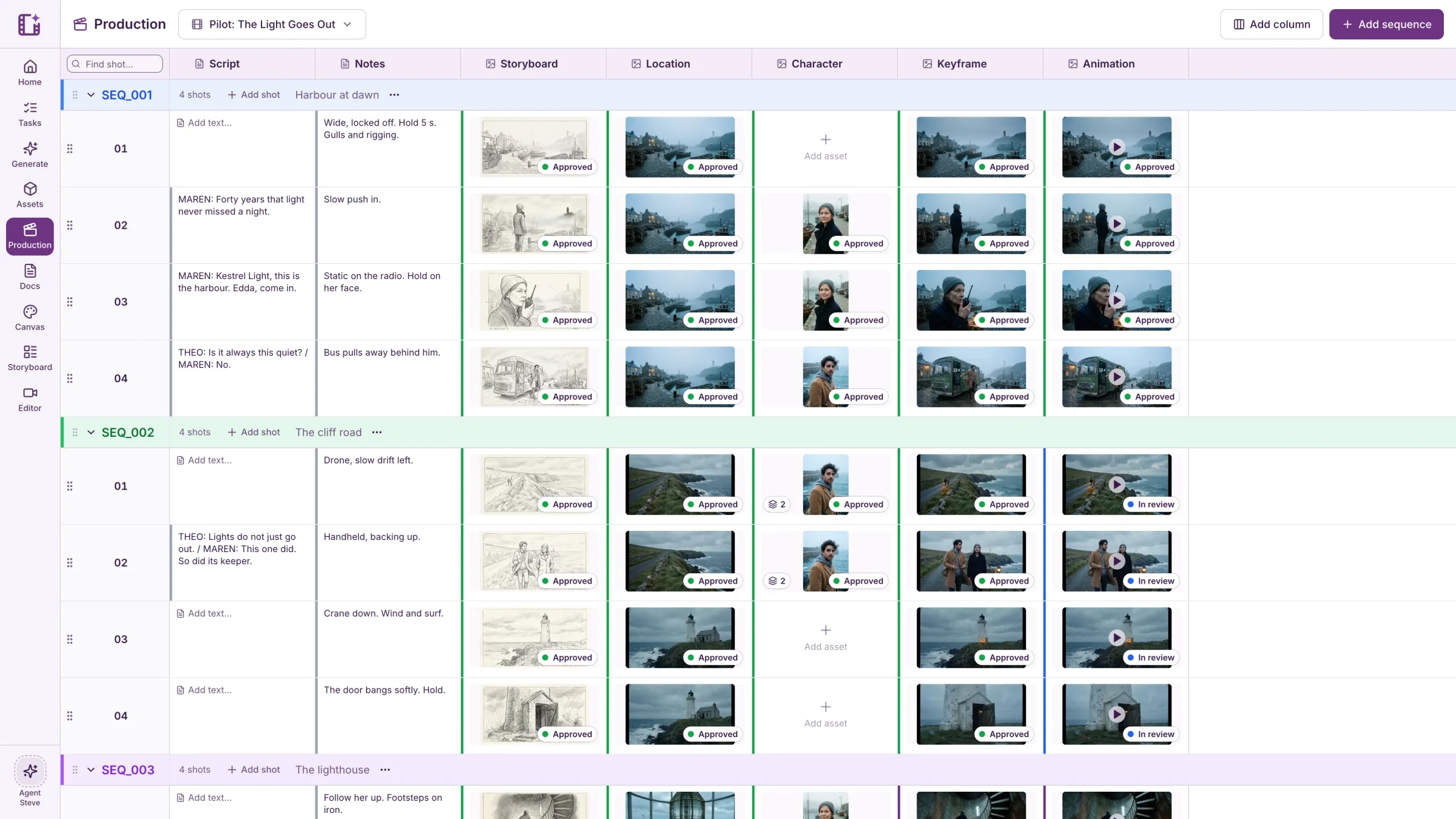
Cinemagiq is AI production software for planning and creating long-form series and films with a team. It connects scripts and notes, episode and shot planning, storyboards, reference assets, AI generation, review, approvals, and editing in one shared workspace. The Production Board organizes work by episode, sequence, and shot, with statuses, assignments, and comments. The versioned Asset Hub stores characters, locations, and props, while the Generation Studio offers more than 40 image, video, and audio models. Its Steve AI agent can read project boards, documents, and assets and propose work with the cost shown before a run. A free plan is available; paid team plans start at $5 per seat per month, with generation priced in tokens.

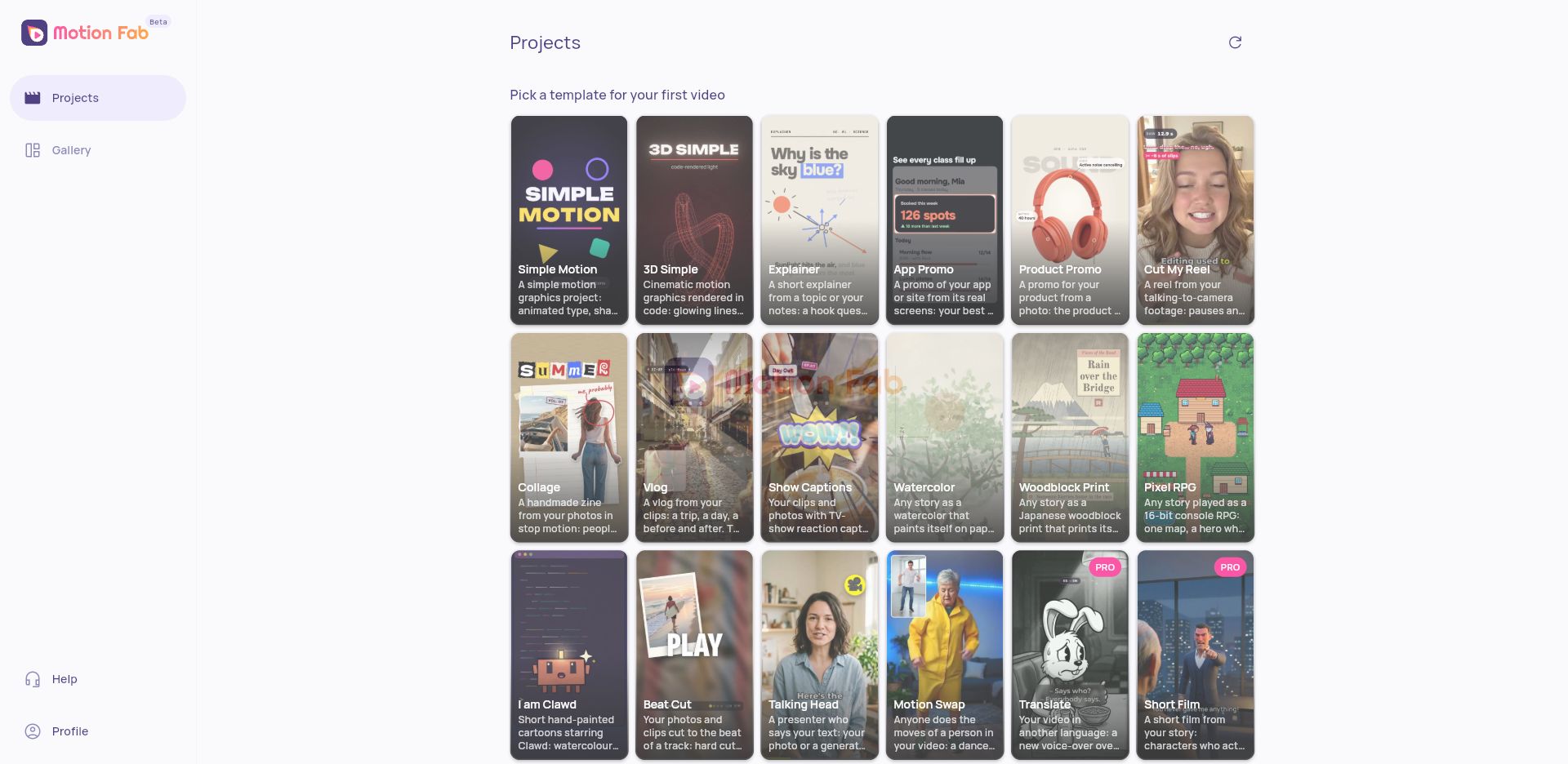
Motion Fab is an AI motion designer for creating short videos through a chat-style workflow. Describe a video and its agent animates it with kinetic typography, 3D effects, sound, a live preview, and MP4 export. The official workspace offers templates for simple motion graphics, 3D motion, explainers, app promos, product promos, reels, collages, vlogs, captions, watercolor and woodblock styles, pixel role-playing games, and short films. The product is in beta. Its free plan includes monthly credits and 1 GB of storage, while the paid Pro plan provides more monthly credits, 10 GB of storage, and access to Pro templates.
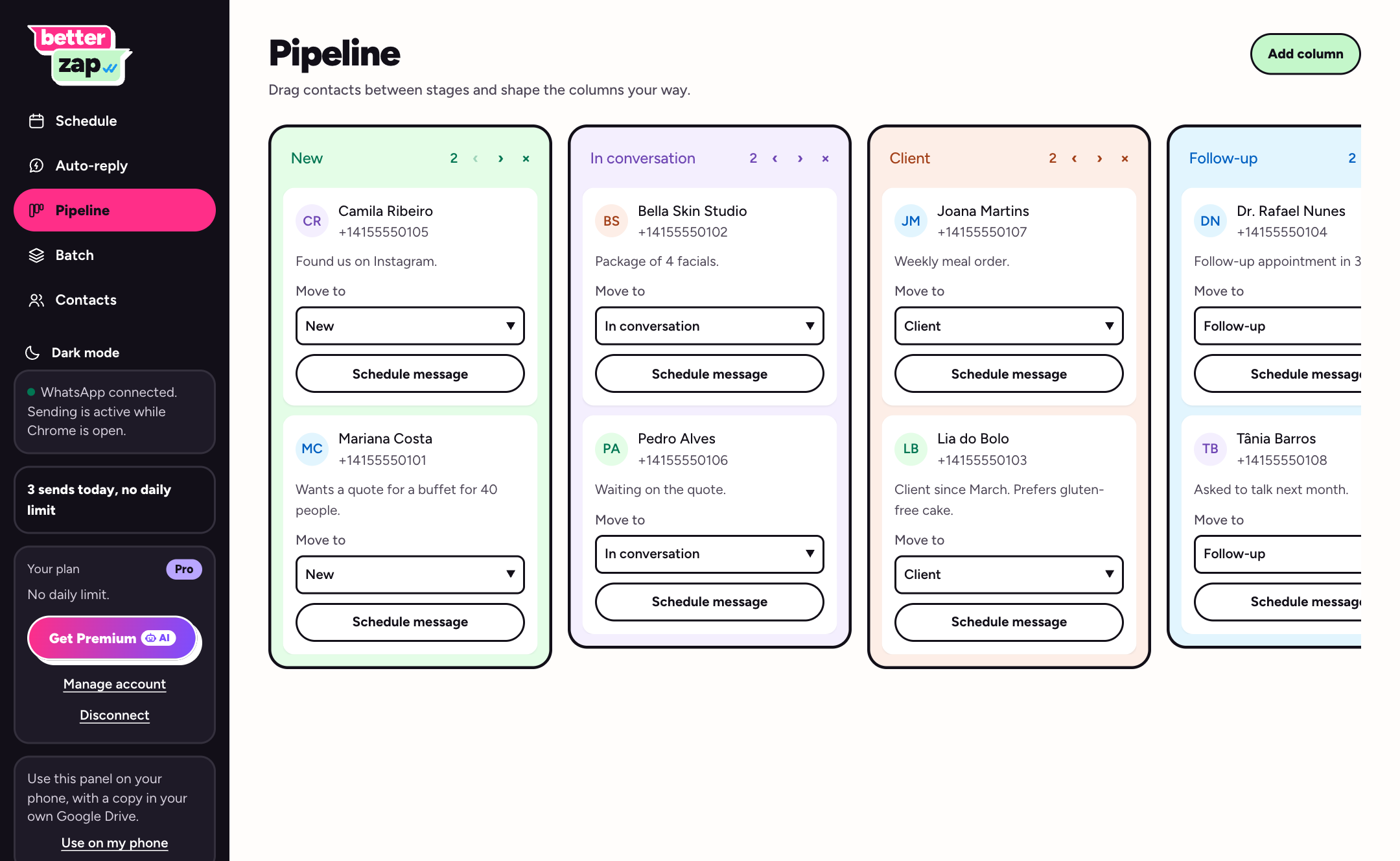
BetterZap is a Chrome extension for small businesses that use WhatsApp Web. It combines scheduled messages, templates, a customer pipeline, follow-up reminders, and menu-based auto-replies. Its Premium plan adds an AI chatbot that answers from a business-written knowledge base and hands conversations to a person when the answer is not available. The official site demonstrates the pipeline interface and an interactive, explicitly simulated customer conversation. BetterZap requires Chrome to remain open with WhatsApp Web signed in; it is designed for clinics, salons, shops, freelancers, and other service businesses that handle customer questions and bookings through WhatsApp. The free plan allows up to 20 messages a day; a paid subscription starts at US$10 per month, with the AI chatbot available in the US$20 Premium plan.

Kling AI is Kuaishou's creative platform for generating videos and images from text prompts and reference media. Its Kling 4.0 video model creates clips up to 30 seconds with synchronized audio; users can guide outputs with keyframes and reference images to keep subjects consistent across scenes. Kling Image 3.0 generates still images and storyboard frames, while Canvas supports longer projects, script development, node-based generation, and iterative editing. The workspace also includes motion control based on reference videos, image-to-video generation, and tools for multi-task production. Creators, filmmakers, marketers, and ecommerce teams can use Kling to prototype storyboards, make social or product videos, and create consistent visuals for campaigns. A free plan includes limited credits; paid subscriptions add monthly credits, higher-resolution generation, watermark removal, and commercial-use rights.